


Regions and cities team up with the European Commission to promote jobs, skills and social inclusion
On this page
- Employment and Social Policy
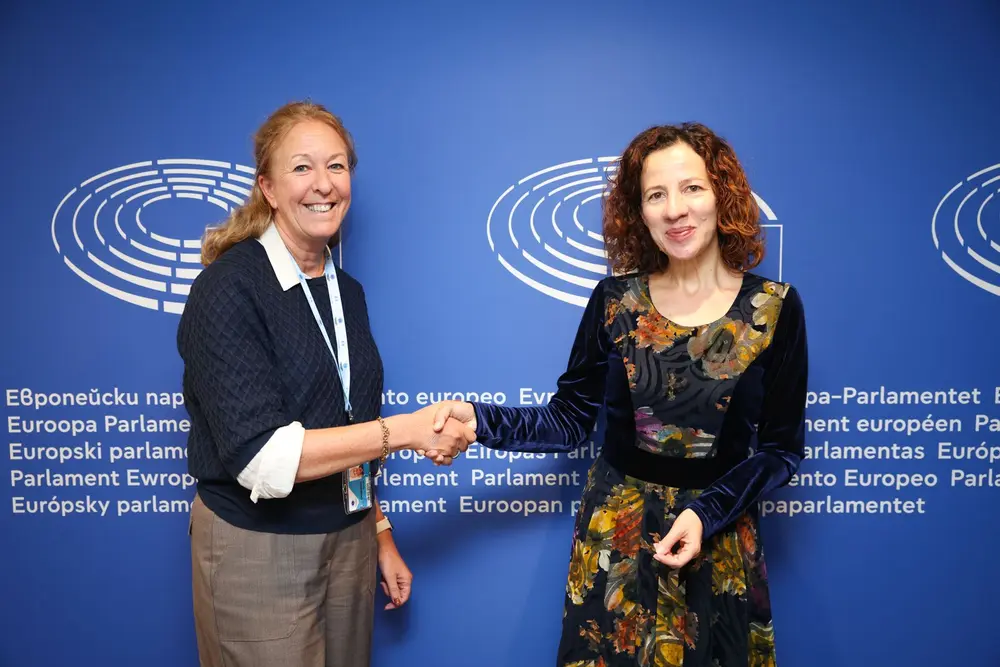
Local leaders warn cutting EU investments in people and places would undermine any commitment to a fairer, more cohesive and competitive Union
The European Committe of the Regions (CoR) joins forces with the European Commission (EC) with a renewed Joint Action Plan (JAP) for a stronger social Europe, signed on 13 October. In a plenary debate with EC Executive Vice-President Roxana Mînzatu, local and regional leaders opposed any weakening of EU support for quality jobs and social cohesion in the next EU long-term budget and demanded a continued attention to local needs.
Strengthening EU cooperation for a more inclusive and resilient social Europe
In the presence of CoR President Kata Tüttő, the EC's Executive Vice-President for Social Rights and Skills, Quality Jobs and Preparedness, Roxana Mînzatu, and the Chair of the CoR's Commission for Social Policy, Education, Employment, Research and Culture (SEDEC), Heike Raab signed a renewed Joint Action Plan on employment and social policies.
Building on the partnership established in 2020 between the CoR and the European Commission, the Joint Action Plan strengthens the role of local and regional authorities in shaping and delivering Europe’s social agenda. It puts quality jobs, skills, labour market resilience and the fight against poverty and social exclusion at the heart of the cooperation.
Key priorities include implementing the EU’s Quality Jobs Roadmap, the Union of Skills and the Anti-Poverty Strategy. Following the signing, local and regional leaders debated these priorities with Executive Vice-President Mînzatu and called for fair pay and working conditions, support for workers to develop skills for the green and digital transitions, and targeted measures to help people out of poverty. They stressed that EU policies must address the specific needs of regions and cities to reduce inequalities and help build a fairer, more inclusive and competitive Europe.
CoR members also warned that achieving these objectives on the ground will require a stronger social dimension in the next long-term EU budget, for 2028-2034. They called for a strong, stand-alone and adequately funded European Social Fund Plus to turn Europe’s social ambitions into results and to ensure that no person or region is left behind.
Skills for the Future
Regions and cities will adopt a set of recommendations on the "skills for the future" on 14 October in an opinion led by rapporteur Karolien Grosemans (BE/EA), member of the Flemish Parliament, and prepared at the request of the Irish Presidency of the Council of the EU. They call for EU skills policies to shift from forecasting jobs to fostering adaptability and continuous lifelong learning in response to technological and economic change, for a more competitive Union.
Local and regional leaders warn that artificial intelligence (AI) is reshaping jobs and stress the need to equip people, businesses and regions to adapt and thrive. They call for stronger basic skills, including literacy and numeracy, as the foundation for developing digital and AI skills and for lifelong learning.
CoR members highlight the crucial role of local and regional authorities in identifying skills needs and bringing together education and labour market players to build regional skills ecosystems. They also call for sustained EU funding and better coordination between Cohesion Policy, Erasmus+, Horizon Europe and Digital Europe to ensure that all regions can benefit from technological change.
Quotes
Kata Tüttő, President of the European Committee of the Regions: "In this delicate phase when EU social policies risk to be heavily underfunded and sidelined, we need to intensify the cooperation between local leaders and the Commission, increasing our common work to deliver good jobs, good care services, good education and training opportunities, and fight against poverty and exclusion. The European Pillar for Social Rights identifies clear objectives at EU level, but without adequate investments and a real partnership between the Commission, national governments, regions and cities those objectives risk remaining on paper. We are fully mobilised to secure both investments and increased cooperation.
Roxana Mînzatu, Executive Vice-President for Social Rights and Skills, Quality Jobs and Preparedness: ”Europe’s social commitments must translate into opportunities in every community. Local and regional authorities are essential partners. Together, we must tackle homelessness and housing exclusion, improve access to affordable homes and build on the zero long-term unemployment pilot projects to help people back into lasting, quality jobs. This also means helping a child access a school meal, a young person gain skills and find their first job, or a parent find affordable childcare. Our joint action plan with the Committee of the Regions will strengthen this cooperation, turning shared objectives into tangible improvements in people’s lives.”
Heike Raab (DE/PES), Member of Cochem Collective-Municipality Council and Chair of the SEDEC Commission: “Europe’s social ambitions must make a difference in people’s everyday lives. Stronger cooperation between the European Committee of the Regions and the European Commission will help ensure that policies on quality jobs, skills and tackling poverty reflect the needs of our communities. By drawing on the experience of regions and cities, we can develop practical solutions that reduce inequalities and build a fairer Europe.”
Karolien Grosemans (BE/EA), member of the Flemish Parliament: “We cannot predict exactly which skills people will need in ten to 15 years. What we can do is give people a strong foundation and the ability to keep learning and adapting. Strong basic skills are the starting point, while life-long learning must allow people, businesses and regions to keep pace with change.”
Background
- Photos and videos from the Plenary Session.
- Follow the Press service account on X.
- The 2026 EU Annual Report on the State of Regions and Cities, published by the CoR on 13 October states that labour and skills shortages are becoming widespread reality across Europe, with 97% of occupations experiencing shortages in at least one EU country in 2025. The report also stresses the need for strong regional skills ecosystems and training programmes linked to emerging industrial needs, ensuring that workers in declining sectors can access new employment opportunities and companies can find the workforce they need.
- On 6 May 2026, the European Commission adopted the first EU Anti-Poverty Strategy.
- On 4 December 2025, the European Commission adopted the Quality Jobs Roadmap aiming to foster high-quality employment in the EU.
- On 5 March 2025, the European Commissionlaunched the Union of Skills, a strategy that brings together a number of mainly non-legislative initiatives to boost competences for people and competitiveness for employers.
- The Skills for the Future opinion, prepared at the request of the Irish Presidency of the Council of the EU, was discussed with Irish Minister Marian Harkin at the SEDEC meeting on 30 September, ahead of the Presidency’s forthcoming Council conclusions on STEM education and skills for artificial intelligence.
- Regions and cities call for a stronger Social Fund in the next EU budget (CoR opinion, 2026).
- Union of skills strategy (CoR opinion 2025).
- An EU anti-poverty strategy (CoR opinion 2025).
Contact:
Ângela Machado
Tel: +32475413158
Members
-
-
Germany

Heike RAAB
Member
Member of Cochem Collective-Municipality Council
 PES (Party of European Socialists)
-
Hungary

Kata TÜTTŐ
Member
Member of the General Assembly of Budapest Capital
PES (Party of European Socialists)
Related news
-
Local and regional leaders urge for protection against discrimination, harmful conversion practices and hate speech
-
Ekrem İmamoğlu, Mayor of Istanbul, has been awarded the fifth edition of the Mayor Paweł Adamowicz Award for his defence of democracy, solidarity and the independence of local government in the…
-
The European Committee of the Regions (CoR) adopted an opinion on the forthcoming EU Anti-Poverty Strategy during its Plenary Session on 14 October, during a debate with Roxana Minzatu, Executive…
