Lauri Ouvinen
Lauri.Ouvinen@cor.europa.eu

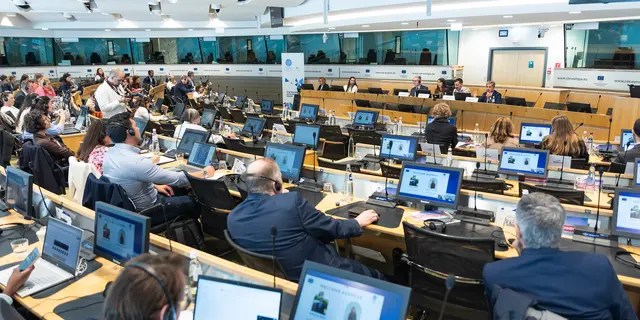
Regions and cities believe that Cohesion Policy should remain the EU's main investment tool to reduce regional disparities and help address the green, digital and demographic transitions, based on the strengths identified by each territory. Members of the CoR's Commission for Territorial Policy and EU budget (COTER), who met in Oulu in Northern Finland, adopted on 17 September several key opinions calling to guarantee the future of the EU Cohesion Policy in the next multiannual budget post-2027 and to simplify the management of the funds at local level.
The recommendations on the reform of cohesion policy have been drafted by the CoR President Vasco Alves Cordeiro and the COTER chair Emil Boc (RO/EPP), Mayor of Cluj-Napoca. The draft opinion adopted unanimously by the COTER commission sends a strong message to the European Commission and especially the commissioner-designate for Regional Policy Raffaele Fitto, stressing that the Cohesion Policy must remain managed bottom-up and built on the strengths of each region.
"Cohesion Policy is not a sprint, it's a marathon of support and a matter of necessity, if our aim is to have a stronger and united Europe. The single market can't work without cohesion policy, which is crucial to raising Europe's competitiveness and using full potential of the EU's entire territory. Otherwise, divisions and dissatisfaction across Europe will grow. We are also against any kind of centralisation, but not against reforms: Cohesion Policy must be modernised and simplified to increase flexibility and reduce red tape at local level," Mr Boc said.
"Cohesion Policy is about Europe as Europe is about cohesion. It must be reinforced and renewed, so that it can be in the future a key instrument for all regions to take advantage of the single market and make the EU more competitive", President Cordeiro said in his online intervention.
Members were invited to Oulu by Mirja Vehkaperä, Chair of Oulu City Board, who highlighted the role of cohesion funds in support of the regional development in Finland's northern, sparsely populated regions. These best practices were presented to the members during a conference on Wednesday. In his keynote speech, the Finnish Minister for Economy Wille Rydman underlined the need to better consider the challenges of EU regions bordering Russia that are suffering from the current geopolitical situation.
Other draft opinions adopted by the COTER commission:
The future of European Territorial Cooperation (ETC) post 2027
Rapporteur Karsten Uno Petersen (DK/PES), Member of South Denmark Regional Council: "European Territorial Cooperation (ETC) embodies the true added value of European integration. In a continent with the highest concentration of national borders in the world, I firmly believe that ETC must be strengthened to offer tangible solutions to the 30% of Europeans living in border regions. As a crucial pillar of Cohesion Policy, ETC empowers regions and cities to harness the full potential of the EU, fostering collaboration and shaping the future of Europe."
EU budget and place-based policies for new design and delivery mechanisms in the MFF post-2027
Rapporteur Marie-Antoinette Maupertuis (FR/EA), President of Corsica Regional Assembly: "In order to address the multiple challenges EU faces, while strengthening cohesion across all the territories, we need a more strategic, simplified and agile multi annual budget. A greater involvement of regions and cities in shaping and implementing development strategies is crucial in order to maximize the impact of the budget on the ground, in line with the principle of active subsidiarity, multilevel governance and better regulation."
Solving obstacles to the cooperation of emergency services in the EU's border regions
Rapporteur Pavel Branda (CZ/ECR), Deputy Mayor of Rádlo: "There are various types of obstacles to cross-border cooperation in emergency services, including legal and administrative, financial, technical, linguistic, and mental/cultural. For example, on many borders of the EU, ambulances or fire trucks cannot cross the border despite this endangering peoples’ lives, and citizens cannot be transferred to the nearest hospital as it is across the border in another Member State. It is crucial that all levels of government work together to address these obstacles, which are still too widespread in the EU as they can unnecessary cost lives."
How to exploit the full potential of cohesion olicy to tackle demographic change
Rapporteur Raquel García González (ES/PES), Director of European affairs of the Asturias Government: "Demographic change has an uneven impact across territories. It threatens our landscapes, biodiversity, and weakens European competitiveness. In short, depopulation is the challenge of our time if we want to safeguard a cohesive Europe. For this reason, Cohesion Policy must better support struggling regions, using new indicators, co-financing rates, and adjusting state aid rules. With these tools and this support, regions will be able to ensure all Europeans have access to basic public services, no matter where they live."
Lauri.Ouvinen@cor.europa.eu
Portugal

Member
Member of the Regional Assembly of the Azores


Romania

Member
Mayor of Cluj-Napoca Municipality, Cluj County


Czechia

Member
Member of the Local Assembly of the Municipality of Rádlo


France

Member
President of the Assembly of Corsica


Denmark

Member
Regional Council Member, South Denmark Regional Council


Spain

Alternate
Director General for European Affairs, Government of the Principality of Asturias

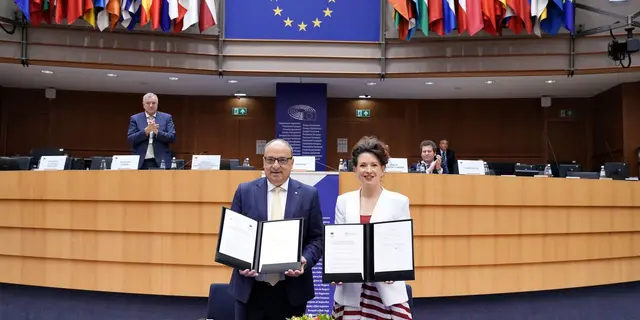
The European Committee of the Regions (CoR) and the Conference of Cantonal Governments of Switzerland (CCG) signed a Memorandum of Understanding (MoU) on 2 July 2026, during the CoR plenary session.
Local and regional authorities must be formally involved in the EU's future internal security instrument for 2028–2034. This is the core message of the opinion Union support for internal…

The European Committee of the Regions (CoR) and the European Olympic Committees (EOC) have urged EU co-legislators to embed sport across all Multiannual Financial Framework (MFF) 2028–2034 funding…