

NAT Commission urges coordinated action to enhance EU preparedness
Auf dieser Seite
- Disaster resilience
- Multi-level governance
- Public health
- Tourism

During its meeting on 23 September, the Commission for Natural Resources (NAT) adopted key draft opinions on EU tourism, crisis preparedness, and medicine security. Local and regional leaders emphasised the need for systemic, inclusive, and locally anchored approaches to strengthen resilience, manage tourism sustainably, and ensure equitable access to critical medicines across the Union.
Towards sustainable and resilient tourism in the EU
The first draft opinion adopted by members of the NAT commission calls for a systemic and adaptive EU tourism strategy that balances economic growth with social cohesion, environmental protection and territorial resilience. Led by Margarita Prohens Rigo (ES/EPP), President of the Balearic Islands Government, the opinion underlines the need to manage tourism demand smartly, regulate accommodation to tackle overtourism and housing pressures, align tourism with the green and digital transitions, and strengthen interregional cooperation, particularly for islands and vulnerable regions. It stresses that communities must remain at the centre of tourism policies, with better governance, funding, innovation and data-driven tools to ensure that tourism contributes to long-term prosperity without undermining residents’ quality of life or local ecosystems.
Rapporteur Margarita Prohens Rigo (ES/EPP), President of the Balearic Islands Government: “Tourism is part of Europe’s identity and, with this opinion, the Balearic Islands invite the other regions to embark together on the path of transforming tourism towards sustainability, resilience, and the well-being of all Europeans.”
European Preparedness Union Strategy
Further in the meeting, members adopted an opinion on the Commission’s proposed European Preparedness Union Strategy, led by Maria Isabel Urrutia De Los Mozos (ES/EPP), stressing that Europe urgently needs a coordinated, all-level approach to anticipate and respond to increasingly complex crises, from natural disasters to hybrid threats.
The opinion underlines that preparedness will only be effective if regions and cities are given a stronger role, resources and capacity, in line with subsidiarity and multilevel governance. It calls for the inclusion of a recovery phase in the strategy, more flexible and rapid EU funding instruments, the creation of a European risk map and a disability map to better protect vulnerable groups, and stronger public awareness and inclusive preparedness measures. Local and regional representatives also urge reinforcement of the EU Civil Protection Mechanism and rescEU, better coordination between civilian, private and military actors, and a comprehensive EU communication system to ensure secure information flows at all stages of crises. Their message is clear: preparedness must be systemic, inclusive, and locally anchored to safeguard security, freedoms and resilience across the Union.
Rapporteur Maria Isabel Urrutia De Los Mozos (ES/EPP), Regional Minister for the Presidency, Justice, Security and Administrative Simplification, Government of Cantabria: “In the current international context, Europe's preparedness is imperative and urgent; we need a strategy that brings together measures and instruments that link the Union, its Member States, all institutions and levels of government, including regional and local, the private sector, citizens and society in general, in order to address the multidimensional, complex and cross-border dangers and threats we face.”
Critical Medicines Act
While the NAT commission welcomes the EU’s efforts to address growing medicine shortages, it urges stronger action to secure equitable access for all patients. The draft opinion on the proposed Critical Medicines Act, led by Erika Von Kalben (DE/Greens), calls for funding for cleaner, more efficient production and for regional authorities to be actively involved in evaluating and implementing strategic projects, with local rules respected. It also demands including regional representatives in the Critical Medicines Coordination Group to ensure local expertise and priorities are reflected.
Rapporteur Erika Von Kalben (DE/Greens), Member of the State Parliament of Schleswig-Holstein: “Today we are highlighting, from a regional perspective, the critical issue of medicine supply. While major crises dominate the headlines, illness remains a daily challenge for many people in our communities – it can affect anyone, anywhere. Fortunately, research has provided solutions for many health problems, but these must be accessible to all. Healthcare must be part of a safe Europe, a goal achievable only in a united and solidary Europe.”
Also during the meeting
-
Following on the proposal for the long-term budget of the European Union 2028-2034, the Multiannual Financial Framework (MFF), unveiled by the European Commission on 16 July, the NAT Commission has appointed four rapporteurs to work on different aspects of the proposals:
-
-
Alessio Mammi (IT/PES) on agricultural products and EU school scheme;
-
-
-
Adam Banaszak (PL/EA) on the Union Civil Protection Mechanism;
-
-
-
Thibaut Guignard (FR/EPP) on the Common Fisheries Policy, to the European Ocean Pact and of the Union’s maritime and aquaculture policy;
-
-
-
Piotr Całbecki (PL/EPP) on the Common Agriculture Policy for the period from 2028 to 2034.
-
-
At the end of the meeting, local and regional leaders held a debate on the new EU Bioeconomy Strategy, discussing stakeholder feedback from the recent public consultation. They focused on key priorities such as increasing circularity, promoting sustainable biomass use, enhancing climate action, and boosting innovation in biotechnology and biomanufacturing, while also addressing regulatory barriers and the need for better alignment between EU and national policies.
Background
-
The European Parliament is preparing a report on “Enhancing connectivity, preserving cultural heritage and driving local excellence in European tourism – destination management and regional tourism growth” led by MEP Daniel Attard (MT/S&D), and a report on the “Framework for strengthening the availability and security of supply of critical medicinal products as well as the availability of, and accessibility of, medicinal products of common interest” led by MEP Tomislav Sokol (HR/EPP).
Contact
Hélène Dressen
Tel: +32 471502795
Helene.dressen@cor.europa.eu
Mitglieder
-
-
Poland
Piotr CAŁBECKI
Mitglied
Councillor of the Kujawsko-Pomorskie Voivodeship
 EPP (European People's Party)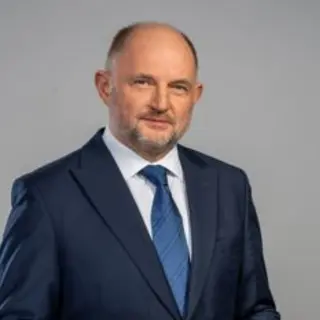
-
France
Thibaut GUIGNARD
Mitglied
Municipal Councillor of Ploeuc-l’Hermitage
EPP (European People's Party)
-
Italy
Alessio MAMMI
Mitglied
Regional Minister of the Emilia-Romagna Region
 PES (Party of European Socialists)
-
Spain
Margarita PROHENS RIGO
Mitglied
President of the Balearic Islands Government
EPP (European People's Party)
-
Germany
Erika VON KALBEN
Mitglied
Member of the State Parliament of Schleswig-Holstein
 The Greens and Progressives
Related news
-
Die Mitglieder der Fachkommission für natürliche Ressourcen (NAT) des Europäischen Ausschusses der Regionen (AdR) kamen am 1. und 2. Oktober in Kastilien-La Mancha (Spanien) zusammen, um das…
-
Distretto Sardegna Bio in Italien und Cussac-Fort-Médoc in Frankreich wurden am 23. September in Brüssel anlässlich des Europäischen Bio-Tages mit den EU-Bio-Preisen 2026 für die „beste Bio-Region…
