Οι δήμοι και οι περιφέρειες διαδραματίζουν κεντρικό ρόλο στην ανταγωνιστικότητα της Ευρώπης, ως βασικοί κινητήριοι μοχλοί της καινοτομίας, της βιομηχανίας και της ανάπτυξης. Κατά τη σύνοδο ολομέλειας…


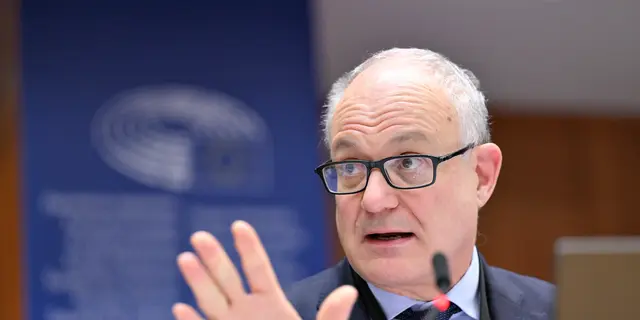
You are the rapporteur of the European Committee of the Regions (CoR) for the opinion on the future Multiannual Financial Framework, which was adopted few days ago by the COTER commission and will be presented to the CoR plenary in March 2026. Can you summarise the 3 main messages of the opinion?
My opinion is based on various discussions and feedback held at the CoR with local and regional leaders as well as key stakeholders. We believe that:
· Cohesion Policy must remain the backbone of European solidarity, grounded in partnership and subsidiarity. Local and regional authorities must have a decisive role in planning and implementing investments.
· The MFF must ensure stable and predictable funding, especially for cohesion, and strengthen the EU’s capacity to respond to new challenges without weakening jointly managed funds.
· A strong place-based and performance-oriented approach is essential, recognising regional strengths, safeguarding local democracy, and ensuring that simplification and flexibility do not sideline local authorities or undermine Europe’s long-term investment strategy. Europe needs all engines in action.
What is your appreciation of the letter written by the European Commission's President Ursula von der Leyen, in which she seems open to slightly modify the initial MFF proposal?
I welcome the Commission President’s openness to adjust the initial MFF proposal. This shift recognises the concerns raised by regions and cities. However, the revised text still falls short: it does not provide a ring-fenced budget for all categories of regions, nor does it guarantee a stand-alone, treaty-based Cohesion Policy.
The requirement for Member States to justify any reduction below 25% for more developed and transition regions is a step in the right direction, as it confirms that cohesion must be delivered across all of Europe.
Negotiations between the co-legislators – the European Parliament and the Council of the EU - are only beginning. The CoR will stay fully engaged to ensure that the final agreement strengthens cohesion as a key tool for competitiveness, defence and a fair transition — and for improving the everyday life of citizens.
You were member of the group of experts appointed by the European Commission (in the previous mandate) to reflect on the future of this policy. Do you see any of the proposals put forward by that group of experts one year ago reflected in the Commission’s MFF proposal?
As a member of that expert group, I do recognise several of our ideas in the Commission’s proposal: the reaffirmation that cohesion is central to European solidarity, the stronger focus on flexibility, and the understanding that competitiveness, security and the green transition all depend on long-term investment in our regions and cities.
However, some important elements are still missing. We called for a distinct, treaty-based Cohesion Policy with a protected budget, a clear 'do no harm to cohesion' principle and binding multilevel governance so that regional expertise genuinely shapes EU investment.
The proposed National and Regional Partnership Plans and the risk of renationalisation go against this spirit. So, while there is continuity with our work, we need to improve the proposal during negotiations to reach the level of ambition required to build a truly shared and resilient Europe.
So far, the European Parliament seems very much aligned with the concerns of cities and regions. Some leading members of the European Parliament (MEP) were side by side with #CohesionAlliance members on the day of the public protest, that you joined as well. Are you in contact with them? How are you working with MEPs?
The European Parliament has been a strong ally for regions and cities, and I want to thank our partners — especially the EPP Group and also S&D— for the important improvements already achieved. Earlier this year, before the proposal was published, I discussed various matters with influential EPP Group MEPs in the working group on budget and structural policies. Since then, I have continued the dialogue in various formats and meetings, including during a public hearing in the committee on regional development (REGI).
I am also in regular contact with national leaders, both in government and in opposition. In the months ahead, both the Parliament and the Council will be key partners. I will work closely with them to ensure that the final legislation reflects the needs of Europe — because this budget is not just about figures. It is about democracy, local decision-making and the everyday quality of life of our citizens. The future of Europe needs all regions and cities.
Οι δήμοι και οι περιφέρειες διαδραματίζουν κεντρικό ρόλο στην ανταγωνιστικότητα της Ευρώπης, ως βασικοί κινητήριοι μοχλοί της καινοτομίας, της βιομηχανίας και της ανάπτυξης. Κατά τη σύνοδο ολομέλειας…
Οι δημόσιες συμβάσεις αντιπροσωπεύουν περίπου το 14 % του ΑΕΠ της Ευρωπαϊκής Ένωσης, ενώ σχεδόν το 45 % τελεί υπό τη διαχείριση των τοπικών και των περιφερειακών αρχών. Ωστόσο, οι αυξανόμενες…
Η Ευρωπαϊκή Επιτροπή των Περιφερειών (ΕτΠ) προειδοποίησε ότι η τρέχουσα πρόταση για τον μακροπρόθεσμο προϋπολογισμό της ΕΕ μετά το 2027 θα μπορούσε να οδηγήσει σε περαιτέρω συγκέντρωση στα χέρια της…
