Víctor Moreno Morales de Setién
victor.morenomoralesdesetien@cor.europa.eu
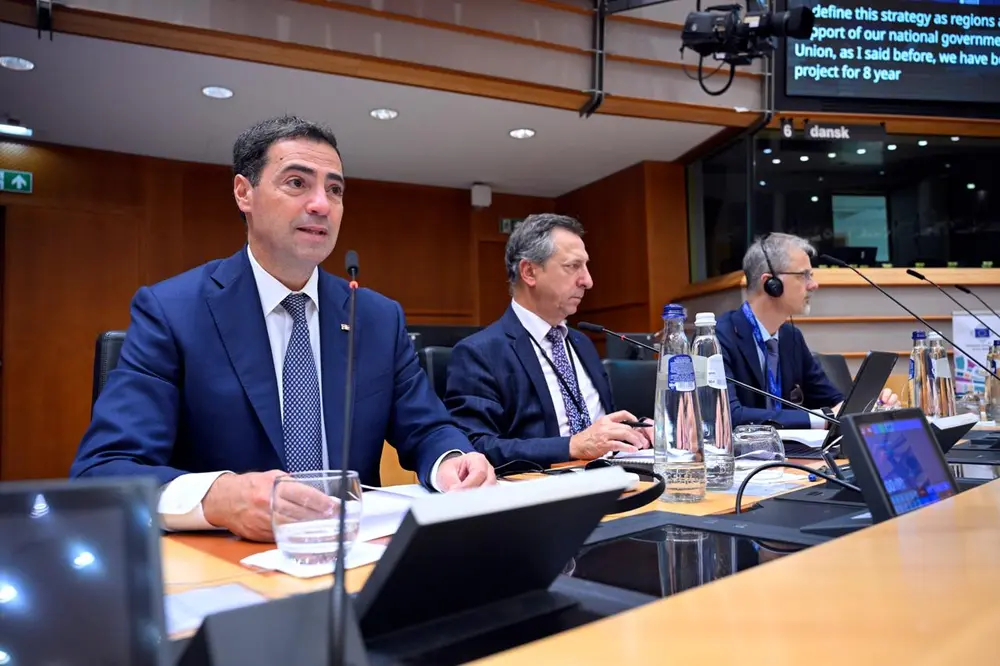
The European Committee of the Regions (CoR) has set out its proposals for the EU’s emerging Atlantic macro-regional strategy, calling for better transport and energy links, coordinated funding and a full formal role for local and regional authorities in its governance.
The opinion, 'An Atlantic Macro-region', was adopted at the CoR plenary session on 14 October. It responds to the European Council’s December 2025 invitation to the European Commission, working with Member States, to develop an Atlantic macro-regional strategy by June 2027.
The CoR calls for the strategy to integrate the existing Atlantic Maritime Strategy, to strengthen connectivity and territorial cohesion along the Atlantic seaboard and to be backed by a funding framework that preserves the territorial dimension of Cohesion policy.
The proposal would bring maritime and land-based challenges together under a single strategy for the Atlantic area.
The development of the Atlantic maritime macro-regional strategy was described as a historic step for the Atlantic area by the rapporteur Ander Caballero Barturen (ES/Renew Europe), General Secretary for External Action of the Government of the Basque Country, and by the President of the Autonomous Community of the Basque Country, Imanol Pradales Gil (ES/Renew Europe), who presented the opinion in the CoR plenary session.
Connectivity, climate and demography
The opinion highlights the combination of geographical, economic and environmental challenges facing the Atlantic seaboard. These include distance from the EU’s main economic centres, inadequate transport links, ageing populations, the risk of depopulation, irregular migration from the West African coast and growing exposure to extreme weather. Some also face the additional challenges associated with the EU’s outermost-region status.
The CoR calls for stronger rail, port, energy and digital connections, particularly rail links between the Atlantic regions of the Iberian Peninsula and the rest of Europe.
It also asks for the strategy to take a differentiated territorial approach that avoids concentrating benefits in the more prosperous areas, and to invest in making smaller towns, villages and remote communities more attractive places to live and work, thereby strengthening what the opinion calls the ‘right to stay’.
Priorities and funding
The CoR endorses the five priorities of the roadmap drawn up by the Conference of Peripheral Maritime Regions of Europe’s Atlantic Arc Commission: namely innovation and sustainability, improved interconnections, climate adaptation, social cohesion and better governance. It proposes adding a cross-cutting dimension, comprising technological sovereignty, geoeconomic security and Atlantic industrial resilience.
On funding, the strategy should, the CoR says, be aligned with EU instruments under the 2028-2034 multiannual financial framework, such as the Connecting Europe Facility III, the national and regional partnership plans and the European Competitiveness Fund. The Committee wants Interreg preserved and strengthened, rejects any centralised approach that could weaken the territorial dimension of Cohesion policy and highlights a 'virtual common fund' through which Atlantic regions would coordinate programmes and calls while managing their own funds.
Multilevel governance
The opinion proposes a single rotating presidency, held for two years by each Member State together with its regions, and a single General Assembly. The EU’s existing Atlantic Maritime Steering Committee would be complemented by a new steering committee for land-based priorities. Each committee would have a representative in the other.
The CoR’s opinion also proposes that a permanent secretariat, financed primarily through Interreg, should be fully operational by the second half of 2027, alongside an Atlantic Observatory and a Joint Financing Working Group. The opinion also stresses that the macro-region should remain open to cooperation with non-EU territories linked to the Atlantic seaboard, which over time could involve the United Kingdom and Canada, as well as nations and regions such as Wales and Quebec.
Background
Contact
Víctor Moreno Morales de Setién
Tel. +32 475 999 662
victor.morenomoralesdesetien@cor.europa.eu
victor.morenomoralesdesetien@cor.europa.eu
Spain

Member
President of the Autonomous Community of the Basque Country


Spain
Alternate
General Secretary for External Action and a Global Basque Country, Government of the Basque Country

At their first meeting of this new mandate, members of the Commission for Territorial Cohesion Policy and EU Budget (COTER) elected Vasco Alves Cordeiro as President and Emil Boc as First Vice…

Local and regional leaders from the European Committee of the Regions (CoR) and their counterparts from the European Parliament discussed on the future of Cohesion Policy together with the European…
