Croatia

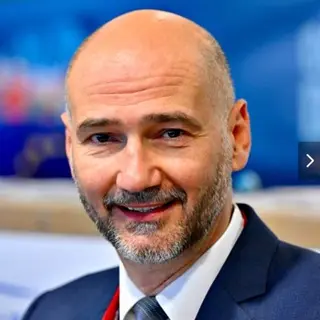
Joško KLISOVIĆ
Member
Member of the Assembly of the City of Zagreb

PES (Party of European Socialists)

Euro-Mediterranean Regional and Local Assembly honours Tunisian public-private cooperation with award for medical start-up.
Local and regional leaders from the EU and Mediterranean partner countries have expressed their commitment to playing an essential role in delivering the EU’s Pact for the Mediterranean, arguing that its success depends on bringing tangible results to communities across the region.
The commitment is contained in a report adopted by on 27 October by the Euro-Mediterranean Regional and Local Assembly (ARLEM) at its plenary session in Tirana, Albania. The report was drafted by Marie-Antoinette Maupertuis, President of the Assembly of Corsica, and Jamal Abu Obeid, Mayor of Greater Ramtha in Jordan.
The plenary concluded with the presentation of this year's ARLEM Award for Young Local Entrepreneurs in the Mediterranean to a Tunisian MedTech start-up led by a woman and supported by a local authority.
From recognition to participation in governance
The EU’s Pact for the Mediterranean, which was launched in November 2025, entrusts ARLEM with the task of serving as "a key institutional channel for regional and local contributions". The report, which is entitled 'Delivering the Pact for the Mediterranean with Local and Regional Authorities', confirms the mobilisation of local and regional authorities to bring their experience and priorities into the Pact’s implementation.
In line with a call of the report, the European Commission will involve ARLEM to contribute to the implementation of the Pact through the rolling Action Plan.
In a video address, the European Commissioner for the Mediterranean, Dubravka Šuica, highlighted the important role that local and regional authorities play in the implementation of the Pact with their knowledge and understanding of the needs and challenges on the ground.
Stronger role for cities and regions
The Pact for the Mediterranean will only succeed if it delivers concrete outcomes for local communities and regions, ARLEM members said. They urged national governments to implement national focal points and channels of communication with municipalities, and called for the Pact to factor into its work the specific characteristics of islands, coastal regions and rural areas.
During the plenary, several projects on the ground were presented to illustrate the practical contribution of local and regional authorities to the Pact’s priorities. The projects cover areas ranging from support for young people and gender equality to the green transition and civil protection. These projects provide examples for cooperation across the Mediterranean that could flow into updates of the Action Plan of the Pact, including through scaling them up, replicating them or extending them to additional partners.
ARLEM Award 2026
The winner of the 8th consecutive edition of the annual ARLEM Award for Young Local Entrepreneurs in the Mediterranean was announced at the end of the plenary session. This year, the prize went to Nada Ghammem for her Tunisian MedTech start-up Bionic Soul, which designs and manufactures affordable prosthetics locally for Africa and the Middle East, and to the local authority, Caisse des dépôts et consignations de Tunisie, that supported her undertaking. The success of the cooperation has boosted local employment.
A total of 53 applications from 12 countries from the southern Mediterranean competed for the ARLEM Award this year. Thirty-seven applications were filed by male entrepreneurs and 16 from female entrepreneurs.
Looking ahead to 2027
ARLEM also agreed to prepare a report on “The new Mediterranean Youth Skills and Jobs Initiative: Unlocking opportunities through local and regional action”. The co-rapporteurs will be Helin Yildiz (IT/PES), a councillor from the Italian town Varese, and Abdelaziz Derouiche, President of Rabat Prefectural Council and of the Moroccan association of prefectural and provincial council presidents. The report will examine how cities and regions can help turn the Pact’s youth commitments into access to skills, quality jobs and local opportunities.
Quotes:
Joško Klisović (HR/PES), ARLEM Commission Co-Chair: "The Pact for the Mediterranean now has to move from commitments to action. In Tirana, we will look at projects that are already working in our cities and regions and at how we can take those ideas further across the Mediterranean. As local and regional leaders, we know that cooperation succeeds when it responds to people’s needs and reaches communities too often left behind. ARLEM can help connect that experience with the wider goals of the Pact and deliver tangible results on both shores."
Marie-Antoinette Maupertuis (FR/EA), President of the Assembly of Corsica and co-rapporteur: “The Pact for the Mediterranean cannot succeed without the genuine involvement of local and regional authorities. We welcome the European Commission's recognition of ARLEM's role in the governance of the Pact. This is an important step forward, but we must now turn this recognition into concrete action by ensuring that locally driven projects are reflected in future action plans and that cities and regions have access to the funding they need. Ultimately, the success of the Pact will be measured by the results it delivers for citizens on both shores of the Mediterranean.”
Background:
Links to thewebstreaming in English and in original language & photos from the ARLEM Plenary in Tirana, Albania
The Euro-Mediterranean Regional and Local Assembly (ARLEM) was created in 2010 by the European Committee of the Regions (CoR), as a means of providing a regional and local voice within the broader framework of the Union for the Mediterranean (UfM). The UfM was established in 2008, a result of an initiative in Euro-Mediterranean cooperation launched in 1995 in Barcelona to address cultural, economic, political, and environmental challenges.
The Pact for the Mediterranean - Middle East, North Africa and the Gulf was launched in November 2025 and constitutes a renewed strategic commitment by the European Union to its southern neighbourhood. It is based on three main pillars: (1) people, (2) stronger and more sustainable economies, and (3) security, preparedness and migration management. The Pact builds on the strategy laid out in 2021 in the EU's New Agenda for the Mediterranean. It is seen as a means of identifying initiatives that will provide a framework for cooperation focused on people, on boosting trade and tapping the potential of renewable energy and the digital economy, and on strengthening security and resilience. It will complement existing comprehensive bilateral partnerships with Tunisia, Egypt and Jordan, and encourage other similar partnerships.
The CoR launched its ARLEM Award for Young Local Entrepreneurship in the Mediterranean in close cooperation with its partners and supporters with the aim of recognising outstanding young local entrepreneurs from the Mediterranean partner countries as well as the local and regional authorities that support them.
Contact:
Julia Damianova
Tel: +32 475 999 498
Julia.damianova@cor.europa.eu
Croatia
Member
Member of the Assembly of the City of Zagreb
France

Member
President of the Assembly of Corsica


Italy

Alternate
Councillor of Varese
