Croatia

Joško KLISOVIĆ
Member
Member of the Assembly of the City of Zagreb

PES (Party of European Socialists)
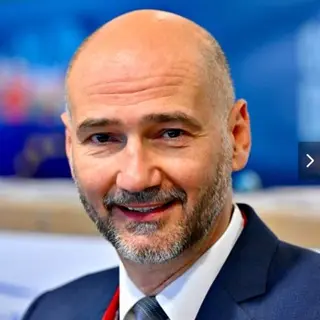
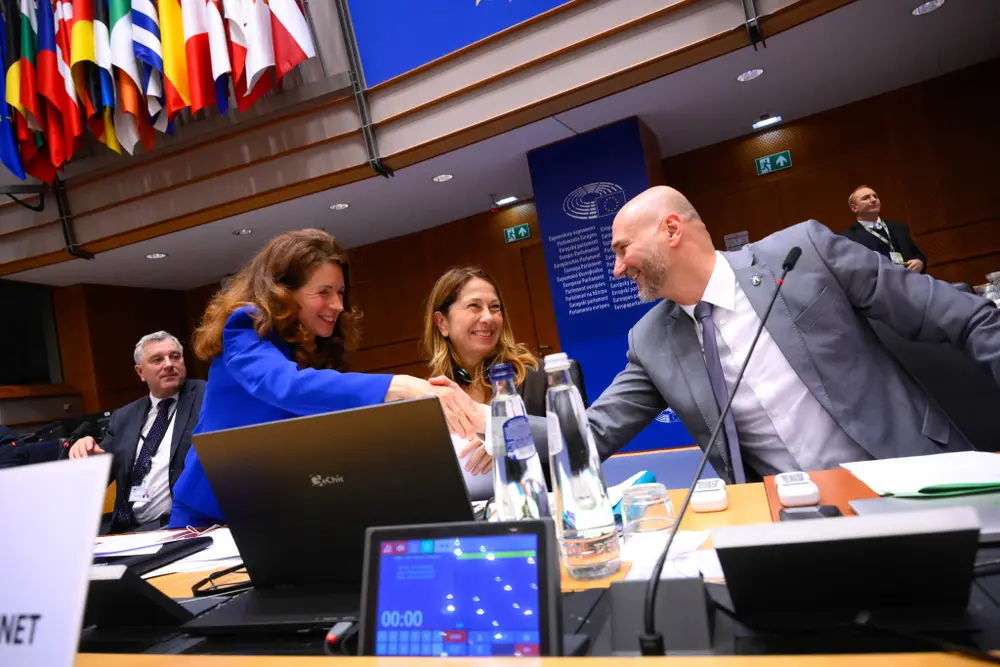
Regions and cities have stressed that empowering local and regional authorities with adequate resources, competencies and political support is key to achieving the EU’s climate targets and a just energy transition. The opinion adopted by the European Committee of the Regions (CoR) on 14 October stresses the urgent need to increase production and supply of clean energy within the EU to ensure competitiveness and security of supply while decarbonising the energy sector and simultaneously addressing energy poverty.
The so-called Fit for 55 package aims to put the EU on the path to achieve climate neutrality by 2050, starting with the reduction of greenhouse gas emissions by at least 55% by 2030. It imposes many obligations on local and regional authorities, including stricter requirements for building renovations, expanded mandates for integrating renewable energy at local level, and binding energy efficiency targets for public sector buildings. However, as highlighted by a recent CoR study and the EU Annual Report on the State of the Regions and Cities, they face significant challenges linked to financial resources, administrative capacity, local community engagement, and regulatory alignment, with significant disparities between the Member States.
With the opinion drafted by Joško Klisović (HR/PES), Member of Zagreb City Assembly, the CoR proposes to establish an EU Action Plan supporting local and regional authorities in creating new energy agencies and one-stop shops with seed funding and technical assistance. It also calls to ensure the early, continuous and meaningful involvement of local and regional authorities in the planning, implementation and monitoring of national and EU energy policies, particularly with respect to the preparation of National Energy and Climate Plans and Social Climate Plans.
The CoR proposes to assume the role of a Fit for 55 Local Implementation Forum with a technical assistance branch and a financial matchmaking function, helping local and regional authorities find suitable EU instruments, public-private partnerships and best practices for scaling up projects. Regions and cities are also calling the European Commission to publish annually a Fit for 55 Local Implementation Scoreboard to track progress on key indicators, such as renewable energy deployment, building renovation rates, grid upgrades and energy poverty reduction.
While the European Commission’s proposal to triple the budget of the Connecting Europe Facility in the next long-term EU budget represents a significant step forward in financing the energy transition, the CoR warns that the proposed centralisation of EU funds through single national plans would undermine engagement and ownership at the regional and local levels. It urges to boost the administrative and technical capacity of local and regional authorities with direct EU-funded technical assistance and cascade funding instruments, such as the European City Facility, and suggests developing an EU-wide training programme for local and regional policymakers and staff.
Addressing energy poverty should also be a priority, as the burden of high, upfront renovation and energy efficiency costs disproportionately affects low-income and energy-poor households. The CoR calls for targeted local measures to ensure a just transition, such as zero-interest renovation loans, direct subsidies for low-income households and support for community-based energy initiatives.
Regions and cities are also calling to accelerate the permitting process for renewable energy projects with a harmonised EU-wide digital permitting system. They point out the need for significant investment to improve the capacity and flexibility of electricity grids and to modernise and adapt them to the current energy mix, and to expand energy storage infrastructure. Support should be prioritised for smart grids, storage, renewable energy communities, sector coupling and decentralised energy systems.
Quote
Rapporteur Joško Klisović (HR/PES), Member of Zagreb City Assembly: “The implementation of Fit for 55 depends to the large extend to the empowerment of local and regional authorities to do the job. What we need is financial and technical assistance and direct access to EU funds.”
Background
Contact
Lauri Ouvinen
Tel. +32 473536887
lauri.ouvinen@cor.europa.eu
Croatia
Member
Member of the Assembly of the City of Zagreb
After one of the most extreme heatwaves ever recorded in central and western Europe, cities and regions are urging the EU to ensure that the next long-term EU budget includes clear and dedicated…
European Committee of the Regions President Kata Tüttő on 4 June called for a stronger, decentralised EU investment policy to support competitiveness, resilience and the green transition, arguing…
The geopolitical tensions in Middle East and Russia's war of aggression against Ukraine have exposed Europe’s structural dependence on imported fossil fuel energy and external suppliers, driving…
