Germany

Annika FOHN
Member
Member of the State Parliament of North Rhine-Westphalia

EPP (European People's Party)

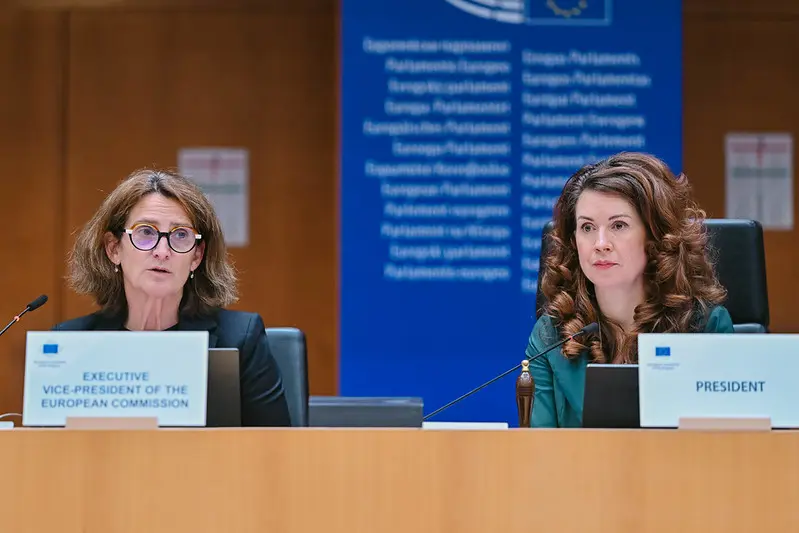
After one of the most extreme heatwaves ever recorded in central and western Europe, cities and regions are urging the EU to ensure that the next long-term EU budget includes clear and dedicated support for climate adaptation and mitigation at the local and regional level.
In a debate with European Commission's Executive Vice-President Teresa Ribera, local and regional leaders expressed appreciation for her commitment to keeping energy and climate action at the top of the EU’s agenda and stressed that the transition to clean energy is an economic imperative, as shown by the multiple energy crises. They further underlined the importance of sub-national climate and environment action at the global level through a set of recommendations for the climate COP31 and biodiversity COP17.
On 1 July, the plenary session of the European Committee of the Regions adopted an opinion led by Mayor of Warsaw Rafał Trzaskowski(PL/EPP), which warns that the proposed structure of the next multi-annual EU budget risks weakening the delivery on EU climate and environment targets and increasing territorial disparities. The opinion also expresses concern about the ambiguity of the objectives and about definitions.
The CoR opinion points out that the general 35% target for climate- and environment-related spending - up to 43% in the National and Regional Partnership Plans (NRPP) and in the European Competitiveness Fund (ECF) - will be difficult to achieve without strong territorial ownership, a clear allocation of responsibilities between different levels of government and predictable funding linked to climate, energy and environmental strategies. It underlines the need for transparent expenditure-tracking, robust classification methodologies and clear performance indicators to avoid 'green-washing' and to ensure that the 35% target delivers in a credible and demonstrable way on the climate and environmental commitments of the EU.
Furthermore, regions and cities expressed concern about the lack of a dedicated programme for environmental action, following the integration of the LIFE programme's Nature and Biodiversity component into the broader multi-priority EU Facility. Considering the central role of cities for Europe’s prosperity, innovation capacity and sustainable competitiveness, the CoR believes the EU Facility should include a protected budget allocation for targeted assistance and direct funding for green transition projects to cities and towns of all sizes.
The CoR also adopted its recommendations for the UNFCCC COP31 and the biodiversity COP17 that will take place this autumn. The opinion, led by ENVE commission chair Kostas Bakoyannis (EL/EPP), Member of Athens City Council, highlights the strong links between climate change, biodiversity loss and water resilience, and underlines that global biodiversity and climate commitments depend on their implementation at the local level. Regions and cities are urging the EU and national governments to ensure the meaningful participation of local and regional authorities - not only as observers, but as contributors to implementation, reporting and accountability, supported by better access to finance, knowledge and data.
Quotes:
Kata Tüttő, President of the European Committee of the Regions and member of Budapest City Council: "Over the past years, Europe’s political attention has understandably shifted towards borders, security and geopolitical crises. Yet for local and regional leaders, the climate crisis never went away. Every heatwave, every drought, every wildfire and every flood reminds us that our cities are heating up, our rivers are drying up and our communities are becoming more vulnerable. Local and regional authorities remain responsible for delivering most climate adaptation and mitigation measures. The question now is whether they will still have the resources to continue. The next EU budget must preserve Cohesion Policy's long-term mission, investing in regions, infrastructure, nature and energy systems, instead of becoming a permanent crisis-response tool. We still have time to reverse this trend, and I deeply appreciate Executive Vice-President Ribera’s commitment to ensuring that climate and energy action remains firmly on the EU agenda."
Teresa Ribera, Executive Vice-President for a Clean, Just and Competitive Transition at the European Commission: “Climate change is a silent killer. In the the wealthiest continent in the world we are not sufficiently prepared for the extreme events caused by climate change. We need to protect our people, get our schools ready, our health system prepared, make or infrastructure more resilient and adapt all our houses to this new reality. Mayors are the frontlines in this response. So, we need to work together and join efforts around the adaptation strategy that the European Commission is going to adopt at the last quarter of 2026."
Rafał Trzaskowski (PL/EPP), Mayor of Warsaw and CoR rapporteur on 'Mainstreaming climate, energy and environmental priorities across the Multiannual Financial Framework': "A Europe that invests in clean energy, climate adaptation and innovation in its regions and cities will be safer, resilient and more prosperous. That is why the NRPPs must include multi-level governance platforms and mandatory urban and regional chapters, and the European Competitiveness Fund must provide direct financing to local energy and climate plans and recognise dual-use infrastructure. The MFF should provide targeted assistance and direct funding for transition projects to cities of all sizes, increasing the opportunities for pilot projects and experimentation. The territories that invest strategically in the energy transition are the ones that attract talent, create quality jobs and remain economically strong and resilient. "
Kostas Bakoyannis (EL/EPP), Member of Athens City Council, ENVE commission chair and CoR rapporteur on 'EU global climate and energy vision - Towards more inclusive climate and environment global negotiations': "This opinion sets out the political priorities of the CoR ahead of two crucial global conferences this year: UN CBD COP17 on biodiversity and UNFCCC COP31 on climate. As Europe faces record heatwaves, rising energy insecurity and growing pressure on communities, the message is clear: we must accelerate the transition away from fossil fuels, strengthen climate-adaptation efforts and invest in nature-based solutions that protect both people and ecosystems. Regions and cities are where global commitments become real action, and they must be recognised as full partners in delivering climate and biodiversity goals."
More information:
· Photos and videos of the CoR plenary debate and the press point with EVP Ribera
· Europe is the most rapidly warming continent in the world, and heatwaves cause more deaths in Europe than all other natural hazards combined. The week preceding the plenary session were one of the hottest ever recorded in central and western Europe. Record-high temperatures were measured in Germany (41.7°C), Poland (40.5°C), Czechia (41.9°C) and Denmark (36.6°C). France recorded its hottest day ever on 24 June with an average national temperature of 30.0°C, and first estimations show significant excess mortality, especially among elderly people. A study published by World Weather Attribution points to a clear link between the intensity of heatwave and the increase of fossil-fuel emissions.
· The adopted opinion is part of a series of 20 opinions on which the CoR is working to assess specific aspects and regulations of the future EU long-term budget 2028-34: check the opinions roadmap. European Commission's proposal sets a general 35% climate and environment spending target across the different programmes, meaning that over €700 billion would be mobilised to support climate and environmental objectives. The National and Regional Partnership Plans (NRPP), which would combine funds for both regional development and the Common Agricultural Policy, would be the main tool to support local communities and businesses in the transition to clean energy, with a 43% climate and environment spending target. However, the reforms envisage no dedicated programme focused on environment and climate action and accessible to local and regional stakeholders, such as LIFE in the current budget term.
· The UN Climate Change Conference (UNFCCC COP31) will take place in Antalya, Türkiye from 9 to 20 November 2026. The opinion adopted by the CoR urges the Parties to renew at COP31 the commitments made at COP28 and agree on a credible pathway to swiftly phase out fossil fuels, triple renewable-energy capacity and double energy-efficiency improvements by 2030, in line with industrial competitiveness, technological innovation and social fairness. The CoR delegation will call for the EU to lead the efforts to establish a mandated and time-bound multilevel dialogue at global level, and to address barriers to climate finance access for cities and regions.
· The CoR will also represent Europe's local and regional governments at the UN Biodiversity Conference (CBD COP17) in Yerevan, Armenia, between 19 and 30 October 2026. The CoR opinion stresses that protecting and restoring biodiversity also strengthens climate-change adaptation at local and regional level. It calls for the timely revision, adoption and effective implementation of National Biodiversity Strategies and Action Plans, with the involvement of local and regional authorities. The COP17 should also deliver an ambitious resource mobilisation package that strengthens access for cities and regions to financing.
Contact:
Lauri Ouvinen
Tel. +32 473536887
lauri.ouvinen@cor.europa.eu
Germany
Member
Member of the State Parliament of North Rhine-Westphalia
Hungary

Member
Member of the General Assembly of Budapest Capital


European Committee of the Regions President Kata Tüttő on 4 June called for a stronger, decentralised EU investment policy to support competitiveness, resilience and the green transition, arguing…
The geopolitical tensions in Middle East and Russia's war of aggression against Ukraine have exposed Europe’s structural dependence on imported fossil fuel energy and external suppliers, driving…

The European Committee of the Regions' ENVE commission warns that the proposed structure for the next long-term EU budget entails the risk of greenwashing, weakening the delivery on EU climate…
