Romania

Emil BOC
Member
Mayor of Cluj-Napoca Municipality, Cluj County

EPP (European People's Party)

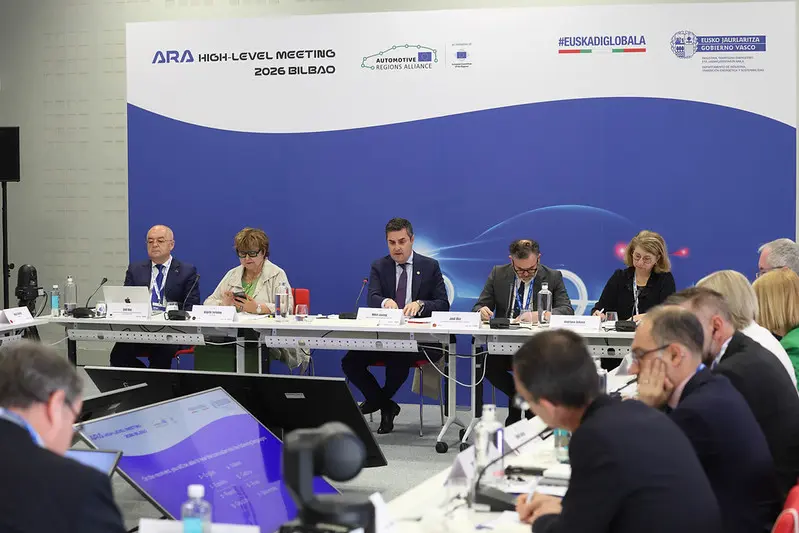
Automotive Regions Alliance adopts the Bilbao Declaration, focusing on the role of Industrial Accelerator Act to support competitive clean transition.
Europe's leading automotive regions signed in Bilbao on 27 May a joint political position on the two files that will shape the immediate future of the sector: the Industrial Accelerator Act and the Automotive Package. The 41 regions of the Automotive Regions Alliance (ARA) support the "Made in EU" approach as a lever to strengthen European value chains, call for a central role for regions in the design and implementation of European industrial instruments, and advocate a realistic technology-open approach to decarbonisation that recognises the role of electrification, low-carbon materials, advanced batteries, hydrogen and sustainable renewable fuels.
The Bilbao Declaration is the first joint political position of Europe's leading automotive regions on the Industrial Accelerator Act, presented by the European Commission on 4 March 2026, and on the Automotive Package, adopted on 16 December 2025. The ARA considers the Industrial Accelerator Act a key instrument to reinforce European value chains, reduce strategic dependencies and support the long-term competitiveness of automotive ecosystems across the Union.
The Declaration supports, in essence, the introduction of "Made in EU" requirements, provided that they are targeted, proportionate and robust, offer legal certainty, avoid undue burdens on SMEs and regional supply chains, and remain compatible with the Union's international commitments. The regions of the Alliance underline that the Industrial Accelerator Act will only deliver its full potential if it is coherent with the Automotive Package, the Automotive Action Plan and the wider regulatory framework, and call for a comprehensive assessment of the implementation of the Automotive Package and its interaction with the Industrial Accelerator Act, to ensure that the overall framework remains fit for purpose.
On the technological dimension of the transition, the ARA reaffirms the principle of technological neutrality as a guiding criterion for regulatory measures. The Alliance supports the European initiative on small and affordable electric vehicles as a lever to bring zero-emission mobility within reach of all European citizens, while underlining that support for the transition should not rest exclusively on this initiative, preserving manufacturers' ability to offer a diverse and demand-driven vehicle portfolio. The Declaration also calls for an assessment, ahead of 2035, of the role and effectiveness of sustainable renewable fuels, including biofuels, in line with the principle of technological neutrality and the objective of climate neutrality by 2050.
A central message of the Bilbao Declaration is the call for regions to play a leading role across the full cycle of European industrial policy — from the design of the acceleration areas to the territorial deployment of public procurement and support schemes and the monitoring of impacts on supply chains, SMEs and regional economies. Regions are not implementation actors: they are the level of government closest to the factories, the suppliers and the workers driving the transition. In this context, the Declaration also calls for the co-design and co-implementation of European industrial and investment instruments together with automotive regions, and underlines the strategic importance of talent, supporting the objectives of the Quality Jobs Roadmap and the forthcoming Quality Jobs Act, and the integration of gender equality as a structural criterion in the labour policies of the sector.
Quotes:
Brigitte Torloting, Vice-President of Grand-Est region (France), President of ARA: “Rising costs, declining production, and the loss of skilled jobs in Europe are affecting numerous value chains. Today, we face the critical challenge of securing the economic and industrial conditions necessary for the European automotive sector recovery. A top priority remains stabilising the economic environment for businesses and providing a clear framework to address urgent competitiveness challenges The European Union must urgently equip itself with strong instruments, as ‘European preference’, to safeguard its industrial base.”
Mikel Jauregi, Minister for Industry, Energy Transition and Sustainability of the Basque Government: "Today, in Bilbao, Europe's leading automotive regions make a double commitment; we stand our ground as Europe’s industrial base whilst believing in an open Europe. We welcome foreign partnerships in a fair playing field. The Bilbao Declaration recognises that the green and digital transition of the sector will only succeed if it strengthens, rather than weakens, the European industrial base, and if regions are acknowledged as actors of leadership, not only of implementation”.
Emil Boc (RO/EPP), Mayor of Cluj-Napoca and First Vice-Chair of the Commission for Territorial Cohesion Policy and EU Budget (COTER): "If any proof was needed, the current energy crisis shows the need to accelerate the electrification and decarbonization of the EU economy andto reduce strategic dependencies. At the same time, Europe must ensure that no region is left behind in the clean transition. The automotive sector provides direct and indirect jobs to 13.8 million Europeans and is the main source of employment in many regions across Europe. The EU must listen to the concerns of these regions, as well as continue providing targeted support to just transitions in the next long-term EU budget."
María Chivite (ES/PES), President of Navarra and CoR rapporteur on the EU Automotive Package: “Recent geopolitical developments confirm it: the electric transition must be swift and decisive to secure our industry’s sovereignty and competitiveness. Flexibility along the way, yes but with 2035 as a clear horizon. The European Commission has already provided the tools: Made in Europe, affordable electric cars, and a battery strategy. Yet their success depends on policies focusing on regions with their innovation ecosystems, the only ones capable of turning these goals into reality.”
More information:
Contact:
Lauri Ouvinen
Tel. +32 473536887
lauri.ouvinen@cor.europa.eu
Romania
Member
Mayor of Cluj-Napoca Municipality, Cluj County
Belgium

Member
Member of the Municipal Council of the City of Marche-En-Famenne


Regional leaders and the European Parliament’s co-rapporteur on the EU’s Multiannual Financial Framework have voiced strong opposition the latest proposal for negotiations on the future EU budget,…

Regions and cities have called for a stronger role in the next Connecting Europe Facility (2028–2034) to ensure that infrastructure investments are effectively implemented and better aligned with…

Local and regional leaders voiced strong opposition to the centralisation of Cohesion Policy funding in the next EU budget, during the European Committee of the Regions (CoR) plenary session on 10…
