Italy

Marco MARSILIO
Member
President of the Abruzzo Region

ECR (European Conservatives and Reformists Group)

Local leaders push to reduce transport poverty and for technology neutral approach to alternative fuels.
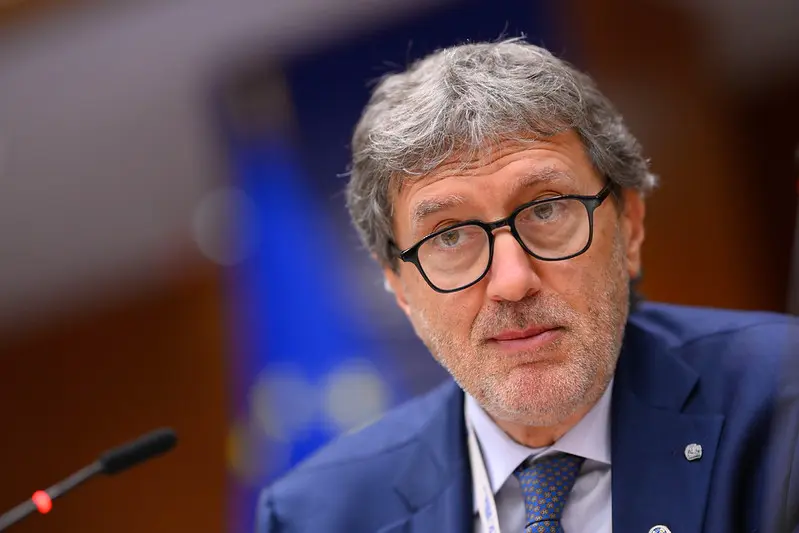
Investment in improving the transport network must reflect territorial diversity and cover the whole of Europe, extending beyond the major metropolitan centres and main corridors. This is the key message set out in the opinion unanimously adopted by the European Committee of the Regions during the plenary session on 14 October, drafted by Marco Marsilio (IT/ECR), President of the Abruzzo Region.
Efficient transport links connecting rural, mountainous, peripheral and cross-border regions are essential for strengthening territorial cohesion and ensuring that people can live and work in their local areas, allowing communities to remain attractive places to live and do business, thus securing the right to stay. Local and regional leaders called in the opinion for high-speed rail lines to be better integrated with conventional and regional rail networks, including by bridging missing links and ensuring affordable connections to smaller towns. They stressed that transport investment must reflect Europe’s territorial diversity and go beyond major metropolitan hubs and core corridors. Without stronger regional networks and better connections between smaller towns and major transport routes, a focus on links between major cities risks leaving less accessible regions behind and widening territorial disparities.
Local and regional leaders also underlined that the transition to sustainable transport must not deepen transport poverty. They welcomed the Sustainable Transport Investment Plan’s recognition of various types of renewable and low-carbon fuels needed to achieve a sustainable transition, while calling for a technology-neutral approach toward the alternative fuels production and deployment for aviation and waterborne transport. EU investment should improve accessibility and affordability in less-connected territories, including public transport, and last-mile solutions. Regions and cities must have a stronger role in transport planning and implementation. Their formal involvement in investment planning, monitoring and long-term infrastructure decisions will be crucial.
CoR members also called for stronger coordination between Cohesion Policy, the Connecting Europe Facility and other EU funding instruments supporting transport. They stressed that local and regional authorities, particularly in less developed and rural regions, should be able to combine EU funding sources through simpler and more integrated access mechanisms. Predictable and long-term funding will be essential for large-scale infrastructure and industrial investments, the CoR said, calling for a credible financing framework combining EU, national and private investment while taking account of the different economic characteristics of individual projects.
Quote
Rapporteur Marco Marsilio (IT/ECR), President of Abruzzo Region: “European transport policy will succeed only if it starts from territories and their real needs. High-speed rail is essential to better connect Europe, but it must go hand in hand with stronger conventional, regional and local rail networks. Major infrastructure projects deliver real benefits only when they also serve intermediate cities, rural and mountainous areas, and less densely populated regions. There can be no ‘right to stay’ without adequate mobility and connectivity. People who choose to remain should be able to reach major urban centres within reasonable travel times and pursue opportunities from their home region. Everyone should be free to leave to study or work, but no one should be forced to leave because of a lack of jobs, education or transport links. Leaving must be a choice, not a necessity; staying must be a right, not a privilege.”
Background
Contact:
Theresa Sostmann
Tel: +32475999415
Theresa.Sostmann@cor.europa.eu
Italy
Member
President of the Abruzzo Region
Europe’s automotive sector is undergoing a profound transformation, with regions and cities facing the challenges of decarbonisation, global competition, technological change and shifting supply…

Regional leaders and the European Parliament’s co-rapporteur on the EU’s Multiannual Financial Framework have voiced strong opposition the latest proposal for negotiations on the future EU budget,…

Europe's leading automotive regions signed in Bilbao on 27 May a joint political position on the two files that will shape the immediate future of the sector: the Industrial Accelerator Act and…