Investment in improving the transport network must reflect territorial diversity and cover the whole of Europe, extending beyond the major metropolitan centres and main corridors. This is the key…


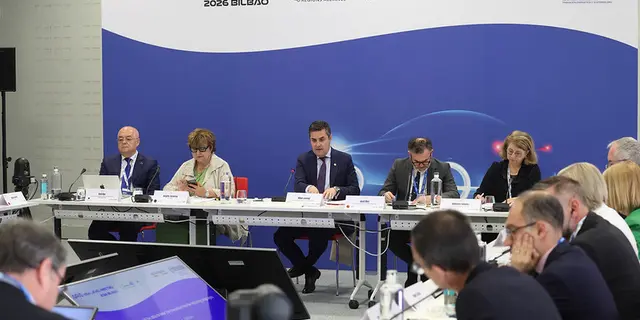
Europe’s automotive sector is undergoing a profound transformation, with regions and cities facing the challenges of decarbonisation, global competition, technological change and shifting supply chains. In this context, members of the European Committee of the Regions (CoR) debated the future of the automotive sector with representatives of the Automotive Regions Alliance (ARA) and adopted an opinion addressing the EU’s Automotive Package.
During the debate, local and regional leaders, together with Brigitte Torloting, Chair of ARA, highlighted the pressure on Europe’s automotive industry from global competition, technological change and rising costs. They stressed the need to protect regional industrial ecosystems and value chains while investing in skills, innovation and new production capacities in regions most exposed to the transition. They also underlined the importance of ensuring that SMEs and suppliers can adapt and remain part of Europe’s evolving automotive value chains.
Following the debate, CoR members adopted an opinion on the Automotive Package, drafted by María Chivite (ES/PES), President of Navarra. The opinion calls for a clear and predictable pathway towards zero-emission mobility and targeted support for regions undergoing economic restructuring. The opinion stresses that electrification is a key route towards decarbonising road transport, but that its success depends on access to affordable zero-emission mobility, charging infrastructure and sufficient market uptake across all regions.
Local and regional leaders called for increased financial support to help manufacturers meet emission-reduction targets while turning the transition into an opportunity for economic growth, industrial renewal and greater European strategic autonomy. The opinion highlights affordability and access to charging infrastructure as essential conditions for accelerating the uptake of electric vehicles. CoR members called for adequate recharging infrastructure across all regions, supported by European, national and regional funding, as well as targeted measures to make electric vehicles more accessible in lower-income regions. Clear and transparent consumer information is also needed to support purchasing decisions and build public confidence in the transition.
CoR members also welcomed the proposed application of the ‘Made in the EU’ approach in the automotive sector as a means of strengthening European production and supply chainsbut called for its implementation to remain proportionate and predictable, and to avoid additional administrative burdens, particularly for SMEs and regional supply chains. As automotive production is concentrated in specific territories, CoR members also stressed the need for place-based support to help regions manage the industrial transition. This should include targeted cohesion funding and investment in skills, retraining, quality jobs and inclusive working conditions.
Quotes
Rapporteur María Chivite (ES/PES), President of Navarra: "Europe's regions and cities have spoken with one voice: competitiveness and electrification by 2035 go hand in hand. Climate change and geopolitical instability are not concepts; they are realities we confront every day in our territories. Empower the regions with real financing, and Europe will lead this transition. The time to speak is over. Now, we deliver."
Brigitte Torloting, Chair of the Automotive Regions Alliance and Vice-President of Grand-Est: “Time is of the essence: global competition will not wait for us. Europe's response must be swift and up to the historic challenge we are facing, with a genuine strategy that protects and upholds automotive production in our territories and regional supply chains. The European Union must urgently equip itself with strong instruments, as 'European preference', to safeguard its industrial base. Our regions have the skills, the infrastructure and the determination needed to meet this transition -- they are key players in the industrial transformation. But we need a clear European framework and targeted investment, as well as to be fully involved in the decisions shaping Europe's industrial and technological future. Otherwise, we will irreversibly lose our industrial ecosystems -- from SMEs to major suppliers -- and with them, the future prosperity of our territories.”
Background
Contact:
Theresa Sostmann
Tel: +32475999415
Theresa.Sostmann@cor.europa.eu
Investment in improving the transport network must reflect territorial diversity and cover the whole of Europe, extending beyond the major metropolitan centres and main corridors. This is the key…
Regional leaders and the European Parliament’s co-rapporteur on the EU’s Multiannual Financial Framework have voiced strong opposition the latest proposal for negotiations on the future EU budget,…

Europe's leading automotive regions signed in Bilbao on 27 May a joint political position on the two files that will shape the immediate future of the sector: the Industrial Accelerator Act and…