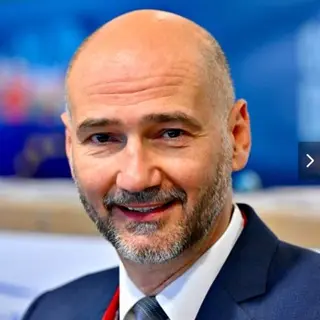
Lithuania

Arnoldas ABRAMAVIČIUS
Member
Councillor of the local government council, Zarasai District Municipality Council

EPP (European People's Party)

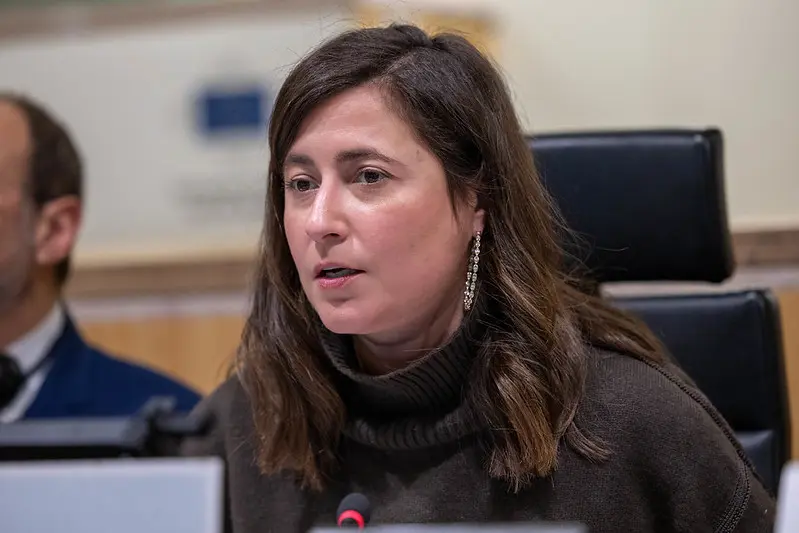
The European Committee of the Regions on 20 November assessed the possible impact of the European Union's next long-term budget on key legislation relating to migration, security, governance of funding, and external affairs, with four rapporteurs warning of negative effects on effectiveness and on cooperation with local communities.
The discussion in the Commission for Citizenship, Governance, Institutional and External Affairs (CIVEX), held on 20 November, was the latest of a series of debates of the proposed Multiannual Financial Framework (MFF) for 2028-2034 by the CoR’s policy commissions.
Local and regional leaders are seeking to secure major changes to the package proposed by the European Commission. The CoR's overall aims are to keep regions and cities at the heart of EU policy, to reverse the trend towards centralisation at European and national levels, and to keep Europe competitive, cohesive and democratic. It is seeking to safeguard cohesion and agricultural policies as core European investment strategies, ensure predictable financing for cities and regions, and keep shared management of critical policies such as Cohesion Policy in order to reduce territorial and social inequalities.
The debate was led by CIVEX rapporteurs currently working on four legislative proposals that will be affected by the next budget, as well as a co-rapporteur on the package of reforms, Sari Rautio (FI/EPP), member of Hämeenlinna City Council and president of the European People's Party in the CoR.
Ms Rautio, whose report is entitled 'Multiannual Financial Framework (MFF) post 2027, including own-resources package', said that the EU needs municipalities and regions as "genuine partners", warning that "competitiveness, security, and transition, which are the key principles now for the European Commission", cannot be achieved without regions and cities. An offer made recently by European Commission President Ursula von der Leyen – of a "regional check that will ensure that local realities are at the core of the plans" – must not be a "tick-box exercise", she said, stating that "we want to have detailed clarification and legal guarantees" concerning the role of local and regional authorities.
The CoR's rapporteur-general on the EU's simplification agenda – Magdalena Czarzyńska-Jachim (PL/EA), mayor of Sopot – emphasised that simplification must not lead to centralisation and stressed the importance of "full local engagement", arguing that "local and regional authorities' involvement in managing EU funds must be guaranteed". Among other proposals, her opinion will argue for the CoR to be "formally involved in trilogue meetings" between the European Parliament, the Council of the EU, and the European Commission in negotiations on legislation. The CoR could play a "preventive role… the limitation of legal inflation". The opinion – 'Cities' and regions' contribution to the simplification agenda' – will go straight to the CoR's plenary session of December 2025 for adoption.
Anne Rudisuhli (FR/Renew Europe), member of the Bouches-du-Rhône Departmental Council and rapporteur on 'The Union Support for Internal Security (2028–2034)', said that the MFF should integrate local and regional authorities as core partners in the €34bn Internal Security Fund, warning that the planned restructuring of the budget's managements risks re-centralisation and the marginalisation of regions and cities – critical actors in migration, integration, and cross-border security. She argued that security and migration management require the mobilisation of all levels of governance, pointing out that local and regional authorities implement EU-funded actions in areas such as the reception and integration of refugees, the prevention of radicalisation, and cross-border cooperation among security forces.
The CoR's rapporteur on 'Union Support for Asylum, Migration and Integration Management 2028-2034' – Arnoldas Abramavičius (LT/EPP), member of Zarasai District Municipality Council – highlighted the need for regions and local authorities to have a defined role and dedicated funding within the EU's Asylum, Migration, and Integration Fund (AMIF), with a particular stress on the integration of migrants and refugees. Local and regional authorities should have direct access to resources, structured engagement in governance, and a focus on integration – not just border security – to address emerging challenges and to maintain support, for example, for Ukrainian refugees.
The European Commission's budget proposal was criticised by Joško Klisović (HR/PES), member of Zagreb City Assembly and rapporteur for the 'Regulation establishing Global Europe'. He stressed that a Multiannual Financial Framework without a dedicated budget for local authorities underestimates the crucial role cities and regions play in securing the EU’s strategic interests. Local and regional authorities are essential for building sustainable peace and development, reinforcing EU partnerships, supporting enlargement reforms, and ensuring predictable, long-term investment on the ground. Failing to recognise and fund their contribution risks weakening the EU’s ability to deliver stability, resilience and visibility where it matters most.
There was widespread criticism of the European Commission to replace the current system of joint management of some major traditional EU policies – including Cohesion Policy and the Common Agricultural Policy – with single national plans, with CoR members saying that the Commission had opened a "Pandora's box" and that sub-national should not be treated as "mere cash dispensers".
Also on the agenda:
CoR members held their annual dialogue with the European Union Agency for Fundamental Right (FRA) on the protection of human rights at the local level, with speakers from the cities of Vienna in Austria and Cascais in Portugal providing of related projects and processes. Rights crucial for democratic participation, which are central to the role of cities and regions, were a particular focus.
Friso Roscam Abbing, head of the FRA's Brussels office, highlighted four "particular fundamental rights challenges" that the FRA sees "as equally important major threats to democracy". One, he said, is foreign information manipulation and interference. A second is the erosion of civic space, which is "facing a very critical shrinking" through "measures restricting the freedoms of association and expression of civil-society organisations, cuts to funding, the "misuse of administrative, legal or financial mechanisms to restrict public participation", and also "physical and, increasingly, cyber-attacks on civil-society organisations". Thirdly, "persistent discrimination and intolerance", including "structural racism" and "gender -based violence". And, fourthly, "the instrumentalisation of migrants and refugees", with them becoming a "scapegoat in political discourses".
Meeting documents and a recording of the meeting are available on the event page.
Lithuania
Member
Councillor of the local government council, Zarasai District Municipality Council

Croatia

Member
Member of the Assembly of the City of Zagreb