Theresa Sostmann
Theresa.Sostmann@cor.europa.eu

The European Union is stepping up its defence efforts with regions and cities playing an increasingly central role in delivery on the ground. During the second meeting of the Working Group on Defence of the European Committee of the Regions (CoR) on 4 December, members reaffirmed regions' and cities' key role in the management of dual-use infrastructure and in ensuring that investment supports resilient and balanced regional development.
In a debate with Riho Terras, Member of the European Parliament and vice-chair of the SEDE committee, and with a representative from the European Commission, members of the Working Group (WG) discussed the implementation of the EU Military Mobility Package and stressed that local and regional authorities play a critical role in Europe’s defence, particularly through military mobility and dual-use infrastructure, such as ports, railways and logistics hubs, that are managed at regional and local level and that are at the core of Europe’s military preparedness. They emphasised the need to remove regulatory and administrative barriers at border crossings, to accelerate permitting procedures for strategic infrastructure, and to ensure the early involvement of regions and cities in project design and implementation. They also recalled that military mobility investments provide direct civilian benefits by strengthening regional connectivity, economic competitiveness and territorial cohesion. Participants also called for stronger EU support to eastern border regions and greater awareness among countries farther from the Russian border.
The WG further highlighted that EU support for the defence industry must create tangible opportunities at the regional level. Effective defence policy relies on strong regional innovation, SME and start-up involvement, collaboration with universities and research centres, and development of dual-use technologies across sectors such as aerospace, health care, mobility, and digital technology. Leaders stressed the need for diversification, civilian spillovers, and long-term regional resilience to avoid over-reliance on defence and advocated for easier access to financing, enhanced advisory services for local authorities and SMEs, and improved alignment between EU funding programmes and regional investment plans. Lastly, the importance of establishing ecosystems that bring together regional authorities and clusters with the aim of sharing best practices, such as the European Network of Defence-related regions, was highlighted.
Quotes:
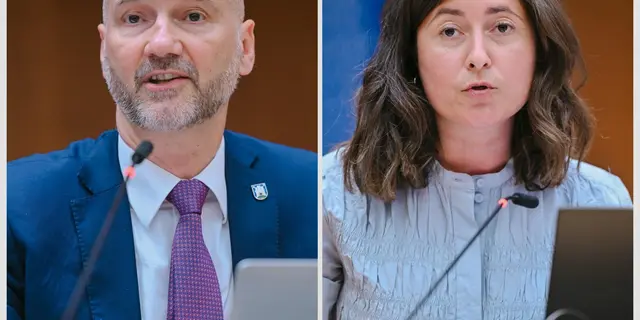
Fernando López Miras (ES/EPP), President of Murcia region and chair of the WG: "Regions and cities are ready to contribute to the EU Defence Industry Transformation Roadmap and ramp up Europe's defence readiness: supporting and accelerating industrial capacities and technologies, skills, and talent and more fluid connectivity and logistics capacity, and expanding the defence ecosystem with new players."
Riho Terras (ET/EPP), Member of the European Parliament and Vice-Chair of the SEDE committee: "The war in Ukraine has taught us how important the resilience of society is in the face of war and other crises. In order to be able to talk about functional resilience, we need to apply expertise from different fields. Local governments and regions have a very important coordinating role in coping with crises. This role needs to be constantly refreshed and trained."
Background
Video from the meeting.
The Working Group on Defence (WG Defence) was established on 1 April 2025 by the Bureau of the European Committee of the Regions, to reflect on and promote the contribution of local and regional authorities to the European Union's evolving security and defence architecture. The first meeting took place on 22 September, marking the launch of the work of the WG.
The establishment of the WG Defence follows calls by the European Council for Europe to take greater responsibility for its own security in the wake of Russia's ongoing war of aggression against Ukraine and rising hybrid threats. The WG acts as a platform for inter-institutional cooperation with the European Parliament’s Security and Defence Committee (SEDE), the European Commission’s Project Group on Defence, the European Investment Bank (EIB) Group and specifically its Security and Defence Office, and other institutional and territorial partners.
In November 2025, the European Commission and the High Representative for Foreign Affairs and Security Policy presented the Military Mobility Package, aimed at ensuring the seamless movement of troops, equipment, and military assets across the EU. The Package consists of a regulation proposal and a joint communication offering a comprehensive set of measures to ensure the swift, coordinated and secure movement of military personnel and equipment across the European Union. It strengthens Europe’s defence posture by addressing military mobility barriers in all dimensions - regulatory, infrastructure and capabilities - that currently slow down military transport across borders.
The European Commission's Directorate-General for Defence, Industry and Space (DEFIS) established the European Network of Defence-Related Regions (ENDR) which brings together regions and regional organisations and clusters in the security and defence sector.
Theresa.Sostmann@cor.europa.eu

The European Committee of the Regions (CoR) has called on the European Union (EU) to recognise cities and regions as strategic partners in its foreign policy, arguing that local and regional…
Recommendation by the EU-UK Parliamentary Partnership Assembly responds to calls by the CoR.

Russia’s ongoing war of aggression against Ukraine, combined with rising hybrid threats, has profoundly reshaped the EU’s approach to defence and security, accelerating the drive towards a more…